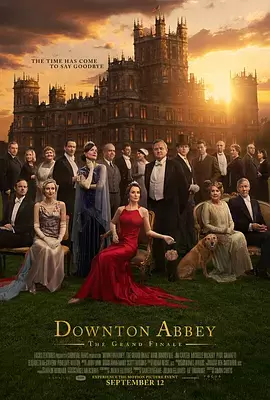
I still remember the amazement I felt when I first watched Downton Abbey in early 2010. The opening scene was a Darcy-esque manor, where newspaper ink had to be ironed off. The sinking of the Titanic directly relates to the lack of an heir in this aristocratic family, and it also serves as the catalyst for Pride and Prejudice—the aristocratic estate, with only daughters, is to be inherited by a completely unrelated outsider, which leads to the love story of the three sisters.
The division between upstairs and downstairs is an angle that previous works of art have never touched upon. This angle was previously only seen in Gosford Park, while Downton Abbey showed us an entire season of it. Jane Austen's pastoral idyll intertwined with the 20th century evokes a nostalgia for the last old aristocracy of England on the eve of World War I, when the light of the Old World had not yet been extinguished, and the definition of dignity was completely different from today.
The eldest daughter's outrageous behavior, the second daughter's perennial subservience, the charismatic wealthy old man, the kind mother, and the stubborn yet enlightened master—each character is vividly portrayed. The downstairs housekeeper, the female housekeeper, the lesbian servant, the maid and the cook, especially their subtle master-servant relationship that transcends master and servant, are key threads connecting the entire drama. Not to mention the gripping love story between the eldest cousin and the eldest daughter, from mutual dislike to the realization that they are each other's soulmates—a story that amazes viewers, who haven't seen such a traditional and perfect love story in many years.
But the show was still ruined, ruined by the production system of modern television dramas. It's unclear how many seasons the writers originally planned, but most American and British dramas don't know if there will be a sequel when they write the first season, because the next season's release depends entirely on the first. If it were a show like *Friends* with its narrative structure, it wouldn't be so bad, since the stories are independent, and viewers could easily start from the second season. But the writers of *Downton Abbey* probably only envisioned the eldest daughter and her cousin getting together in the first season, and didn't think much beyond that, because the story ends there—the prince and princess, Elizabeth and Darcy's happy after—that's a cinematic ending, the ending of *Pride and Prejudice*. But with television dramas being filmed season after season, the plot after the third season felt like a poor sequel.
Because of the lack of a long-term plan, the character personalities established in the first season couldn't be consistent. The characters in the first season had distinct personalities, which created dramatic conflict; there were no flawless good guys, nor absolute villains. The eldest daughter was proud and arrogant, yet courageous enough to break boundaries; the old lady was always finding fault, but possessed a wealth of life wisdom; the eldest cousin's mother was talkative, but a kind-hearted person; even the seemingly villainous servant Baron had his own hardships. The competition, jealousy, and familial bonds between the sisters, and the power struggles among the servants, were the source of the show's tension. But as the story expanded, the plot twists disappeared, and everyone was portrayed as a good person. By the time of the final movie version, it was utterly devoid of conflict and could be described as boring.
Due to the conflict between the writers' short-term and long-term plans, many actors left. The actor playing Matthew Crawley was only intended for the first few seasons, with other filming commitments. However, audience enthusiasm was high, and the production company wouldn't abandon the project. As a result, the show had to continue, but the actors were gone. Forced to resort to the most foolish way to say goodbye to the actors—Matthew Crawley and Matthew Goode were both killed off. It's like watching Friends and Rachel dying halfway through—how could the show continue? They had to find replacements. But this completely disrupted the writers' original vision, leading to plot inconsistencies and unconvincing characters, requiring patching one problem after another. Matthew Goode was replaced by Matthew Goode, but he only wanted to act until the end of the series and didn't want to do the movies, resulting in the absence of the female lead's husband character in the first two films. In the final movie, they had to write about their divorce because another car accident would have been too foolish.
Thankfully, the movie ended. If they were to make another one, I'd rather they make a prequel. The aristocratic life ended there. If there was any lingering glow after World War I, then World War II was the complete destruction of classical life. I can't imagine how many of them would have survived beyond World War II. The tide of time rolled in, and from the moment the master stepped into the "flat," the classical era bid us farewell. This is good news for us ordinary people, but no one can bear to see Downton Abbey disappear into history.