Latest Review Feed
Newest Audience Review Updates
Stay on top of newly posted audience comments across all movie titles, with real-time sorting by recency, quality, and engagement
59 Total Reviews 04/13/2026 This Year 12 Active Titles
Stay on top of newly posted audience comments across all movie titles, with real-time sorting by recency, quality, and engagement
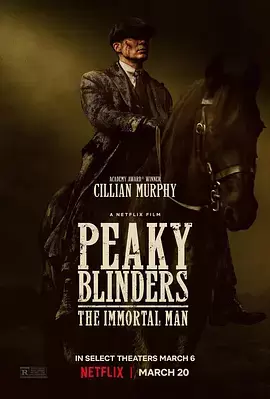
Tommy Shelby's entire life has been a journey of "saving"—saving his eldest brother, then his youngest; saving his aunt, then his cousin; and even in retirement, he still has to save his own foolish son. The only sensible soul in the family who doesn't need his help—his sister Ada—is even shot in the head (after all these years of retirement, she's finally managed to grow her breasts that big; directors, how could you do that?). Maybe we should rename it: *The Bloodstained Rescue*, *What Can Save You, My Shelby Family*, or *The Bloodstained Nanny: Tommy Shelby's Worried Life*. Three stars: one for the addition of the goddess Rebecca, which definitely brightened the otherwise gloomy plot; one for the background music symbolizing Tommy Shelby's legendary life—"Red Right Hand"; and the final star for the classic line at the end: "I almost had it all, but 'almost' doesn't count." Of course, the second half is a summary of Tommy's life. After all, that's life. Everything you want is within reach, but if you hold onto it for a moment, you can't hold onto it. So, a life without regrets is incomplete; a finale without negative reviews is imperfect.
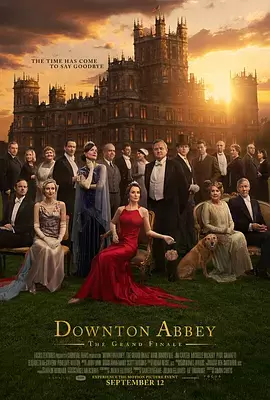
It wasn't until the very last movie that I suddenly realized that Daisy was the character who grew the most in the series (Edith was second). At first glance, I just thought of her as a small character with a very unique appearance (she had a kind of vivid/lively beauty), but the more I watched, the more I felt that the character's transformation was extremely rich: Her relationship with William perfectly embodies the confusion and uncertainty of a young girl. William likes her, and she likes William too, but is it love? Should she marry him? She thinks a lot about it. Others tell her it's love, but she feels it's just liking. Saying she loves him would be deception, and deception can't be brought into marriage; it would be extremely hurtful to the other person. This almost religious resistance to deception is very suitable for a naive teenage girl. As we grow older, many emotions become blurred. When we were young, liking was liking, love was love, hate was hate, and dislike was dislike—all very pure. Her relationship with William is the purest in Downton Abbey. I'm grateful the screenwriter spent so much time developing this relationship, making me think for a long time. The show never tells the audience whether Daisy loved William or not, or whether she had an answer herself. Perhaps it doesn't matter anymore, because Daisy will grow up. When she grows up, two people who love, like, or don't dislike each other can become husband and wife. Later, Daisy, unwilling to remain a cook, yearned to explore the world, study hard, and embrace new things. She resembled a young person full of ambition, painfully struggling between reality and ideals, even rebellious at all costs. This was an awakening of self-awareness, a rebellion against her parents and the old society. She soared to the sky, almost crashing to the ground, but thankfully, the servants in the basement were always there, waiting for her to fall. In the end, Daisy didn't go out to achieve great things, but happily took over the head chef's job. On her last night, Patmore asked her, "Don't you want to go out and explore the world?" Daisy replied, "I feel that my time in the basement has always been happy and meaningful; I haven't wasted my life." At this point, Daisy was no longer a reckless youth, and I believe she will definitely explore the world in the new era. Time has matured her; rather than compromising with life, she has found a way to reconcile with the world and herself. Only with inner peace can one journey to farther places. At the end of the series, the writers added my favorite scene for Daisy: her marriage to Andy. Although they still loved each other, Daisy hesitated as their wedding approached. She seemed unsure if she could spend her life with Andy, as if she didn't love him enough, or that something was missing. Then, after Andy did something drastic for her, she had a sudden realization: she needed a lover who would go through fire and water for her, who would stand against the world for her. This scene moved me deeply. I suddenly understood that Daisy, despite her life experiences, remained adorable and pure. She found in Andy what William lacked. For her at that age, love was about passion and finding the right person, not William's humility and quiet devotion. At this point, she knew what she wanted instead of constantly asking others. The screenwriter vividly portrays Daisy's ten years of youth, a microcosm of everyone's adolescence—innocence, confusion, conflict, naivety, and gradual maturation and rationality. Even more remarkable is that the grown-up Daisy retains a pure yearning for love; how we envy such an adult!
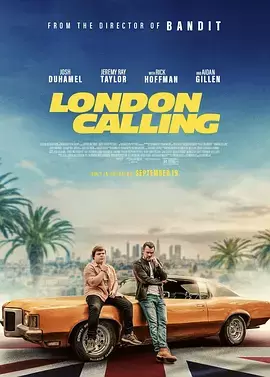
An action movie with a fair amount of comedic elements. The Q&A session at the drug deal scene features the character's favorite author: Tolstoy. When hitmen get old and start making mistakes, it often leads to unnecessary complications... Several recent American action movies I've watched follow this pattern. The gunfight with the music of "The Blue Danube" upstairs and the rather childish costume duel at the end are quite entertaining.

Surprisingly good! The scenery is beautiful, with autumn forests and pastures, and a light mist swirling around the river – perfect for this time of year. The dating reality show is quite interesting; it's more like a challenge game than a dating show, with lots of laughs. Cinderella was really effective, haha. Speaking of which, didn't the production team anticipate this ending? It felt like an obvious loophole, basically just giving the couple start-up capital. The guy is handsome and the girl is beautiful, but the romance is just so-so. However, the ending was still a little touching. It's a rom-com of above-average quality (comparing the rom-com shows from around 2000 to those from 2020 onwards, the early shows mostly made the female lead choose between career and love; now it's about having both – times have changed).

I love you, China 🇨🇳 Magic is subjecting visually impaired individuals to sleep deprivation torture, a prison-like attack on their physical and mental well-being. This noise-induced sleep deprivation torture was previously used against criminals in India. Does anyone know why magic is doing this?

#Vistavision 5+ Sixteen years have passed in the blink of an eye, and half a century has gone by in a daze. The radical left-wing revolution of the 1960s was ultimately unfinished, and now we are about to face the disastrous consequences of the resurgence of neo-fascism in the 1920s. Compared to reality, the intensity of the opposition is magnified many times over. By grafting revolutions from different eras (abbreviating those with lower intensity), the film retains only the initiation of actions and encounters between the opposing factions' narrative lines (omitting the exposition and connection in the editing), creating a sense of constant turmoil and confronting one battle after another. Bob's clumsy physical reactions, honed by years of decadence, combined with the keen intuition gained from his past revolutionary experiences, and Col.'s (the most physiologically/human character, a highly challenging and precise performance) dark humor, sexual/blood entanglements, and absurd action design, all while portraying him as an arm of the system (he is by no means the primary target of criticism for the far right), deeply entangled in the inflated desire to climb the power structure, create a worldview constructed from fragmented and disjointed timelines and generations, characterized by rapid ebb and flow and ebb and flow. It eschews detailed and verbose portrayals, embracing a high degree of abstraction, and the contradictions within the two protagonists are rationally resolved within this absurd world, resulting in a perfect fusion of satirical comedy and serious themes. The final car chase on the winding highway is arguably the best in recent years—the highway undulates like waves, with collisions occurring without warning or reaction time, wave after wave crashing in. The limited perspective at the turning point leads the characters to the final crisis; when the audience has become accustomed to the film's constant breaking and almost completely invalidated genre expectations, the long-awaited MacGuffin sound effects quietly bloom in the ever-changing soundtrack that dominates the rhythm of the entire film, and the gentle, revolutionary view of not giving up on love (which is also as wise as Sensai) is ultimately preserved.

It's practically an upgraded version of *Uncut Gems*, but in *Uncut Gems*, I couldn't understand why the character just wanted to stop the farce as soon as possible, while in this film, I genuinely enjoyed watching him try to turn things around. The main difference is that Howard, the protagonist of *Uncut Gems*, has a pure gambling mentality, deliberately putting himself in trouble just to pursue the ultimate profit, even though he already has assets, a family, and a mistress. His "meaningless" self-destruction made me unable to like the film, even though I admit *Uncut Gems* was very well-made. Marty, on the other hand, is all about playing ping-pong. He has limited resources, connections, and background, so he can only seize every possible opportunity and try everything. (Of course, he's also a complete jerk.) Although he constantly makes mistakes, gains opportunities and then loses them, you know he absolutely has to play this match, and you can follow his frenzied emotions while watching. Reflecting on it, this film perfectly interprets the idea that "a person only lives for a few moments," and Marty lives for those few moments of winning matches (to avoid spoilers). His life outside of matches is almost like the recently popular "cutting line"—life is full of lemons, requiring constant running around and trying every means possible. The aforementioned inherent limitations forced him to constantly "bump into walls," a situation aptly described by the Chinese translation of his name, "Rushing Headlong." T. Chalamet's performance exceeded expectations. Before watching the film, I thought A24's Oscar hopes were just typical boasting, but after a year (or even several) of decline, they finally turned things around this year. His performance in several scenes was incredibly accurate; it's hard to imagine he's the frivolous and superficial person he is in real life. Actors ultimately rely on their work. The film (150 minutes) is relentlessly fast-paced, with many scenes reminiscent of the chaotic and hectic pace of "Good Times with Diamonds," but it also offers moments of respite, making it one of Safdie's best-paced films. Most of the plot deviates from expectations, allowing you to confidently anticipate how the characters will mess things up again. It must be said that Safdie's protagonists are legendary figures of resilience; ordinary people crumble under pressure, but these extraordinary individuals overcome one challenge after another, living each day as if it were 48 hours in a day. Furthermore, the table tennis segment was surprisingly well-shot (and even had a bit of a patriotic theme), especially the most important match. The almost suffocating external factors made the rhythm and emotions of the match particularly exciting. Shouldn't Chen Sicheng think of a way to copy a Chinese table tennis video? (Who are Deng Chao and Yu Baimei?)
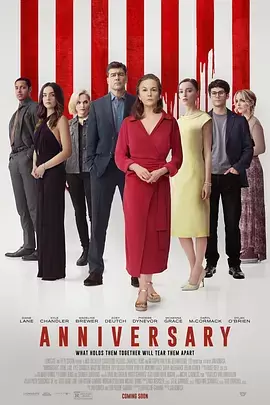
Watching *Anniversary* easily brings to mind British dramas like *Years and Years* and *World War I: The Second War* : all are futuristic allegories that intertwine political radicalization with family life. But Jan Komasa takes a more sinister and "smaller" path—not starting with news headlines, but with a suburban villa, a family dinner, letting the so-called "American Civil War" roar in the distance while slowly hollowing out a middle-class family in the close-up. The most interesting and controversial aspect of the film lies in its handling of time. Komasa deliberately blurs the timeline, offering only ambiguous technical details and political slogans, while the narrative is constantly interrupted and jumps: one scene shows the daughter-in-law just entering the family, the next a return visit after she has gained actual power; one moment the elderly intellectual couple is reminiscing about their student days, the next the television is broadcasting news of their "treason." The timeline isn't linear, but expands outwards like tree rings, each look back more brutal than the last. This approach sacrifices entertainment value and the completeness of character arcs, but precisely serves the theme: history doesn't suddenly explode one day, but rather accumulates quietly within a family through a series of small cracks that no one pays attention to. If you compare *Suicide Room* and * Corpus Christi* side by side, you'll find that Komasa consistently explores the same question: when ideas, beliefs, political passions, and individual lives collide, who is sacrificed and who is left behind? *Anniversary* simply confines this clash within a living room: the older generation of liberal intellectuals, living in the stable illusion of the postwar middle class, believe themselves to be on the "right side" of history; the next generation uses them as stepping stones, rising higher with increasingly radical slogans. When the daughter-in-law transforms from a "cultivated object" into a "revolutionary leader," the family's intimate relationships are rapidly recoded by ideology—dinner parties become interrogation rooms, birthday parties become confession sessions, and once-shared artistic interests become class evidence used for accusations. Many were dissatisfied with the ending: behind all this political upheaval lay a very personal, even petty, thread of revenge—a student's resentment towards their mentor, a retaliation for the memories of being abandoned and belittled. They felt this motive was "too small-minded": since this character already had the power to influence the nation's direction, why waste their life on such a personal matter? For me, this is precisely the most insidious aspect of the film. Because the hatred is based on "small things," it feels more realistic. What truly drives politics to extremes is often not abstract, grand ideals, but a humiliation, an unanswered letter, or a sarcastic remark you took for granted at the time. In this respect, this film is far more honest than many "grand narrative" political films: it acknowledges that revolutionaries are not pure; they too are dragged forward by personal grievances, jealousy, and unrequited love. Formally, this is an extremely restrained film: numerous interior scenes, with the camera mostly lingering between medium and close-ups, and the editing constantly revisiting earlier details as echoes—the eye contact during their first encounter at the art museum, and the final "eye contact" as the elderly couple are masked and taken away; paintings they once discussed are brutally covered by news footage and slogans. Komasa doesn't rush to the front lines like in *World War I & II* , but rather portrays war as an invisible pressure: what's happening in the outside world, we never truly understand; the only certainty is that this family is being hollowed out piece by piece. And that's where the problem lies. Compared to his earlier works, Komasa clearly flattens the narrative, presenting it more like a theatrical cinematic performance: numerous dialogues revolve around abstract positions, and the individual lives, careers, friendships, and desires of family members are compressed into a few highly functional scenes. The son, caught in the middle, could have been a very complex, even more cruel, perspective, but the film maintains a distance from him, allowing him to be more swayed than to actively make choices. So, when the final "reckoning" actually happens, the characters feel both like real-life prototypes and slightly like models: we know this trajectory is not unfamiliar in history, but the emotional weight doesn't completely overwhelm the audience. Genre-wise, *Anniversary* can be categorized as "political science fiction disguised as a family drama." Unlike Michel Franco's *The New Order* , which directly exposes violence, or the television series-like temporal depth of *Years and Years*, it conducts a highly focused thought experiment within two hours: what would happen if we reduced America's current divisions, radicalization, and information cocoons to a single family? Komasa's answer is pessimistic but not sensational: there are no heroic sacrifices, no explicit resistance, only a brief moment of comfort between two elderly people before they are hooded and taken away; only a painting that was once loved, played out on the screen, becoming evidence in the new power discourse.
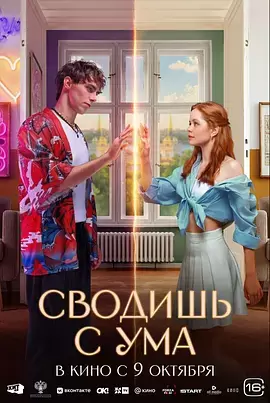
【Core Theme: A Time-Traveling Entanglement Begins with a Cup of Coffee】 ▶️ Initial Encounter During the Apartment Rush: A fight erupts over an apartment in St. Petersburg, with Alyssa and Ivan engaging in a battle of wits. Alyssa narrowly wins the fight by smashing the contract with a cup of coffee. ▶️ Time-Space Intersection: The bathroom mirror undergoes a transformation at the moment of signing the contract, and Alyssa sees Ivan signing the contract in the mirror—this mirror becomes the interface between parallel universes, connecting the two universes of "successful apartment rush" and "failed apartment rush." ▶️ Long-Distance Bond: Initial noise disturbances and breakdowns gradually transform into late-night companionship and mutual redemption—Ivan warns Alyssa of a married scumbag, and Alyssa helps Ivan confront his loneliness. Their broken souls draw closer through their long-distance interaction. ▶️ Heart-Fluttering Choice: Alyssa tries dating in real life but feels deeply disappointed. Ivan's jealousy reflected in the mirror instantly reveals their true feelings; when the two confess their love across time and space, the magic of love breaks down the barriers, and they finally embrace in the same time and space. ⭕️【Unique Highlights: A Fresh and Healing Fantasy Sweet Romance】 ✅ Cleverly Designed Setting: The "rental choice" creates a parallel universe, while the "malfunctioning mirror" serves as both a time barrier and an emotional window, wrapping genuine emotions in a fantastical shell, blending imaginative concepts with heartwarming moments. ✅ Realistically Touching Characters: The indecisive and unlucky female lead, and the carefree and lonely male lead, make the imperfect protagonists more relatable, showcasing the mutual recognition and healing of broken souls. ✅ Sweet Details Galore: Remote dining, synchronized celebrations, and the guitar-driven intimacy scene—the lack of physical contact adds a delicate touch, while memorable scenes like jealousy and the wire ring are sure to capture a girl's heart. ✅ Deeply Exploratory Theme: Exploring the core issue of "love and self"—is it loving the same body or the unique shared experience? Offering a romantic yet profound answer. ✅ Solid Creative Team: Director Daria Lebedeva precisely balances fantasy and reality, while Mila Ershova and Yuri Nasonov deliver natural performances and excellent chemistry.
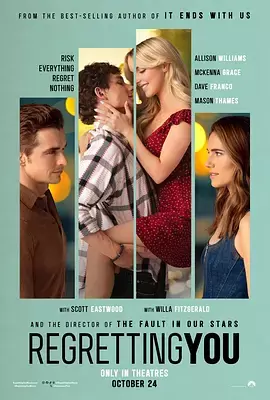
To simply understand *The Regret for You* as another Hollywood sentimental film peddling family tragedy would be to miss its sharpest edge. Directed by Josh Boone (director of *The Beautiful Imperfections of Life*), and adapted from the bestselling novel by Colleen Hoover, the truly gripping aspect isn't the horrific car accident that claims two lives at the opening, but rather the more deadly, silent tension that spreads among the survivors afterward. It accurately captures the typical dilemma of a modern family: sometimes, the greatest obstacle to protecting one kind of love stems precisely from the overprotective nature of another. The film weaves two narrative threads, one explicit and one implicit, into an emotional web that traps Morgan (Allison Williams) and her daughter Clara (McKenna Grace). The explicit thread is the accident that takes away Chris, who is both husband and father, and Clara's idol, her aunt Jenny. The implicit thread is the cruel truth Morgan discovers while sorting through Chris's belongings: her husband's affair with her sister. This secret, like a time bomb implanted in the heart of the family, completely alters the nature of their grief—Morgan loses not only her loved ones but also her entire faith in love and family; her mourning is forced to be mixed with unspeakable anger and a sense of betrayal. The most ingenious design by director Boone and screenwriter Susan McMartin lies in their ability to push the already strained mother-daughter relationship further apart due to their differing approaches to this "bomb." Morgan's choice stems from a maternal instinct for "protection." She swallows the bitter pill alone, attempting to maintain the illusion of a perfect father for her daughter. This silence is the last armor of love she can think of. However, in the perceptive eyes of Clara during her adolescence, this armor becomes evidence of her mother's "indifference" and "quickly moving on." Even more cruelly, Clara herself carries a heavy burden—she believes her conversation with her aunt during the car accident was the culprit that caused her distraction. Thus, the mother conceals the truth, the daughter conceals her guilt, each guarding a secret they believe will protect the other, only widening the chasm of misunderstanding. The middle section of the film is thus filled with suffocating friction. Morgan's attempt to find solace in her brother-in-law Jonah (Dave Franco), who shares a similar plight, is seen by Clara as an incomprehensible betrayal; while Clara's affair with her childhood sweetheart Miller (Mason Thames) is seen by Morgan, whose life has been drastically altered by an early pregnancy, as a desperate attempt to prevent her daughter from repeating the same mistakes. Each of their arguments, seemingly a clash of ideas, is in reality a desperate cry for help from secret, twisted emotions. This tug-of-war of "for your own good" ultimately turns their home into their most familiar battlefield. The film's true moment of reconciliation doesn't stem from a dramatic external event, but rather from the breakdown of the "secret" itself. When the unbearable truths and heavy guilt are finally exposed to the light of day, a paradox emerges: it is precisely those "truths" they thought would destroy each other that become the final bridge connecting them. Morgan discovers that her self-righteous protection may have deprived her daughter of the right to say goodbye to her real, complete father; Clara also sees that beneath her mother's "dominance" lies a similarly broken ruin in need of solace. The film's English title, "Regretting You," takes on a dual meaning at this moment: it is both "feeling sorry for you" and "feeling remorse because of you." This "remorse" doesn't point to the past tragedy, but rather to the mutual isolation they chose out of fear after the tragedy. The charm of *Regret for You* may not lie in its novel story template, but in its delicate portrayal of a typical emotional pattern in East Asian families and even modern intimate relationships: using love as a pretext for isolation. We are accustomed to silencing our pain and sealing away our secrets, believing this to be maturity and responsibility. But the film gently yet firmly reminds us that some protection is, in essence, a gentle imprisonment; and some seemingly dangerous honesty is the only narrow gate to each other's hearts. Ultimately, what allows Morgan and Clara to rebuild their lives is not forgetting the tragedy, but acknowledging and bearing the entire truth together—including its unbearable nature, its regrets, and the small courage that even so, life and love are still worth continuing. This is perhaps the most sincere and courageous thing we can do when facing regret.
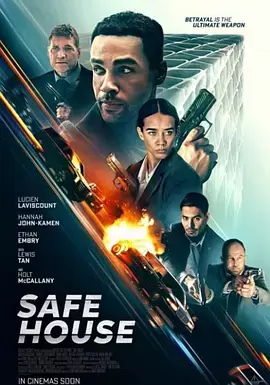
It was decent, not bad, but didn't leave a strong impression in any aspect. This kind of crisis-suspense-action film could have had more twists and turns, but aside from the villain's revelation at the end, everything else was unremarkable. From the beginning, it was clear the black woman was destined to win, given her strong political connections. Most scenes were confined to the safe house, and the action sequences lacked highlights. The main villain survived at the end, but given the film's quality, a sequel seems unlikely.
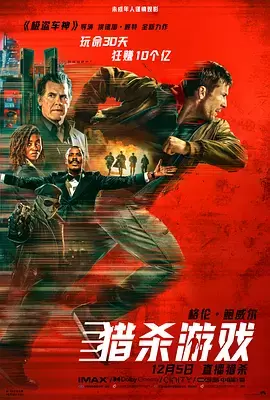
I went to see it in the cinema today, and it wasn't as bad as I thought. The plot and action weren't too embarrassingly bad; I'd give it a 7 out of 10. It's a shame that Douban is full of pretentious people who mindlessly belittle it to make themselves look superior. My disillusionment with Douban started over ten years ago with a pretentious movie called *Mr. Six*. The entire film was pretentious with not a single real fight scene. The action scenes and plot suspense were nowhere near as good as *The Hunt*, yet a bunch of pretentious people on Douban gave it an 8-point rating, which shocked me. From then on, I realized Douban is a haven for pretentious people. Screw you pretentious bastards!